
Alternative Powered Wheelchair Controls
For many people living with neurological conditions, spinal cord injuries, muscular disorders, or progressive diseases, using a standard joystick to drive a powered wheelchair may become difficult or impossible. Fortunately, a range of alternative powered wheelchair controls can be prescribed to enable safe, independent mobility.
Occupational therapists play a key role in assessing, prescribing, and training individuals to use the most appropriate control system based on their physical abilities, goals, and environment.
What Are Alternative Powered Wheelchair Controls?
Alternative controls allow a powered wheelchair to be operated using different parts of the body when hand function is limited. The most suitable option depends on a person's strength, coordination, movement, vision, cognition, and endurance.
Examples include:
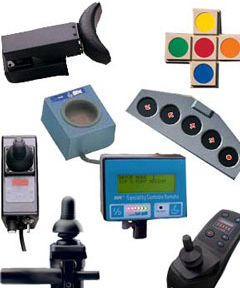
Mini or compact joysticks requiring minimal hand movement.
Head controls that allow the wheelchair to be driven using head movements.
Chin controls for people with good neck control but limited arm function.
Sip-and-puff systems, which use gentle breaths to control wheelchair movement.
Switch controls activated by the hand, head, knee, foot, or other body part.
Touchpads or customised interfaces for people with unique movement abilities.
Many systems can also be integrated with environmental controls, allowing users to operate doors, lights, televisions, or communication devices from their wheelchair.
The Role of the Occupational Therapist
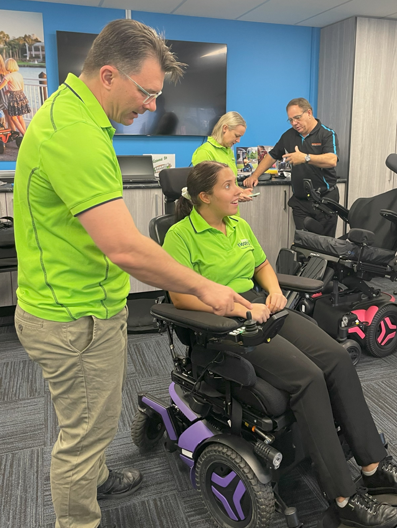
Occupational therapists assess how a person uses their wheelchair in everyday life and prescribe technology that best matches their needs.
Assessment may include:
Upper limb strength and movement
Head and trunk control
Coordination and reaction time
Vision and perception
Cognitive function
Fatigue and endurance
Home, workplace, and community environments
The OT works closely with the client, family, support workers, physiotherapist, assistive technology suppliers, and funding bodies such as the NDIS to trial equipment and determine the most appropriate wheelchair and control system.
Once prescribed, the OT provides education and training to ensure the wheelchair can be operated safely and confidently. Reviews are also important, as a person's needs may change over time.
Working Together with the Physiotherapist
Physiotherapists and occupational therapists often work together during powered wheelchair assessments.
While the OT focuses on selecting the most appropriate wheelchair, seating, and control system, the physiotherapist assesses posture, muscle strength, range of movement, muscle tone, pressure management, and positioning to help optimise comfort, function, and long-term health.
Together, they ensure the wheelchair supports safe mobility while promoting independence and participation in daily life.
Take Home Message
Alternative powered wheelchair controls can provide greater independence for people who are unable to use a standard joystick. With a comprehensive assessment by an occupational therapist, supported by the expertise of a physiotherapist, individuals can access technology that matches their abilities, enhances safety, and enables greater participation at home and in the community.