Cerebellar Ataxia

WHAT IS CEREBELLAR ATAXIA?
Cerebellar Ataxia is a neurological condition that affects the cerebellum, the part of the brain responsible for coordinating movement, balance, and posture. When the cerebellum is damaged, it can lead to difficulties with walking, speech, and fine motor skills. This condition can result from various causes including stroke, multiple sclerosis, genetic disorders, trauma or toxicity.
TYPES OF CEREBELLAR ATAXIA:
Hereditary Ataxias
Autosomal Dominant Ataxias
Spinocerebellar Ataxia
Episodic Ataxia
Autosomal Recessive Ataxias
Friedrich’s Ataxia
Ataxia Telangiectasia
Mitochondrial Ataxia
Acquired Ataxias
Sporadic Ataxia
Multiple System Atrophy - Cerebellar Type (MSA-C)
PEOPLE WITH CEREBELLAR ATAXIA OFTEN EXPERIENCE SYMPTOMS LIKE:
Unsteady gait and balance problems
Poor coordination of hands, arms, or legs
Fatigue
Slurred speech
Eye movement issues
Dizziness or vertigo
Difficulty with the timing, sequencing and learning of motor skills
Difficulty with precise movements (e.g. picking up small objects)
These symptoms can significantly impact daily life, making simple tasks challenging and sometimes leading to a loss of independence.
Each person with cerebellar ataxia experiences the condition differently. That’s why it’s valuable to have one our experienced physiotherapists assess your specific symptoms, challenges, and goals to create a tailored treatment plan that addresses your unique needs.
HOW CAN NEUROJUNCTION HELP?
While Cerebellar Ataxia can be a lifelong condition, Physio and Occupational Therapy play a crucial role in managing symptoms and improving quality of life. Our therapists at Neuro Junction are very experienced in conducting evidence-based assessments for Cerebellar Ataxia and providing individualised treatments, which may include:
-
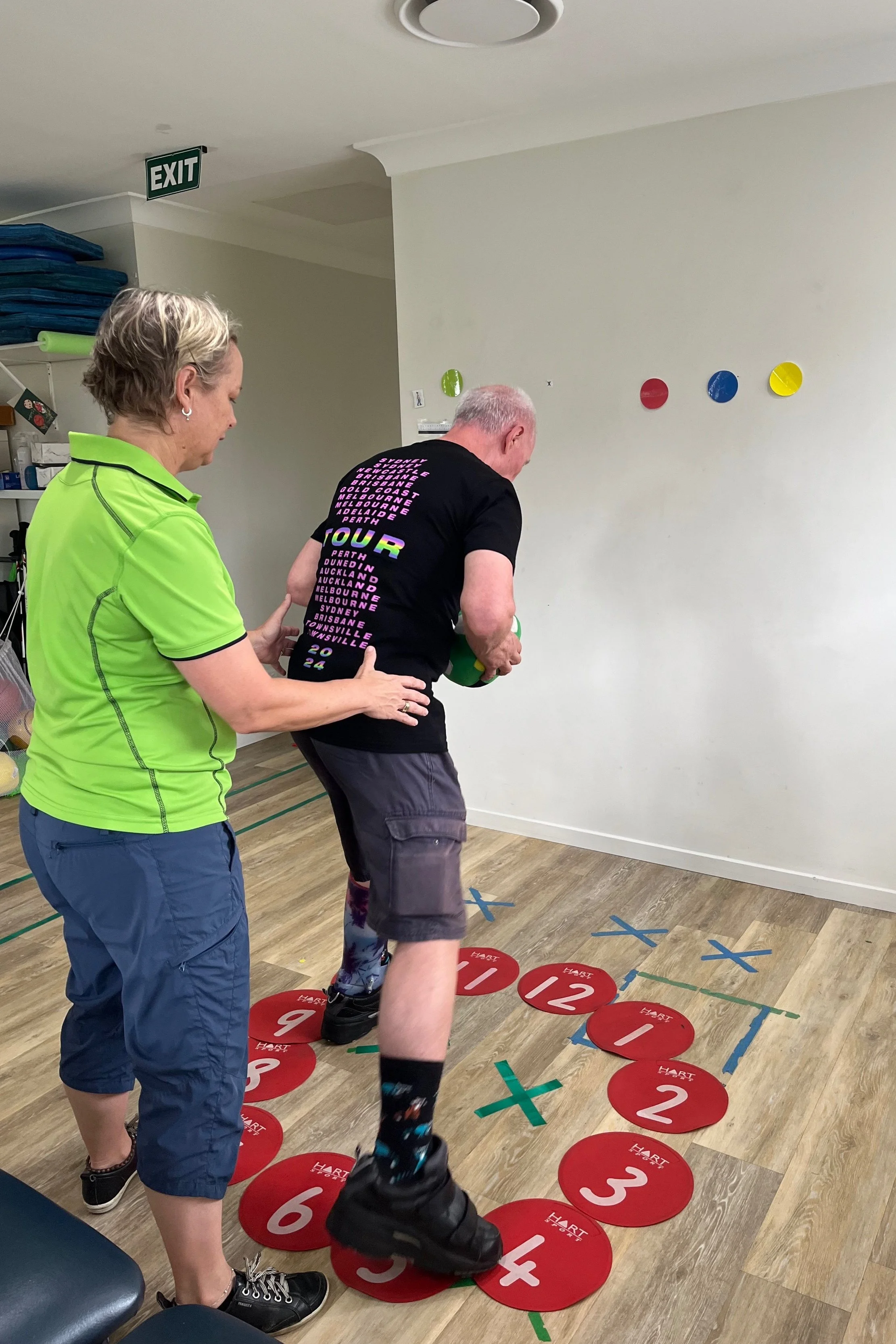
Balance exercises designed to improve the balance and stability of movement, working from the core and progressively challenging balance systems. These exercises help retrain the brain and body to work together more effectively, reducing the risk of falls and improving overall stability.
-
Practicing reciprocal movements and accuracy with limb placement tasks, in a progressively challenging way. This can help improve the coordination of movement and therefore improve the performance of a task
-
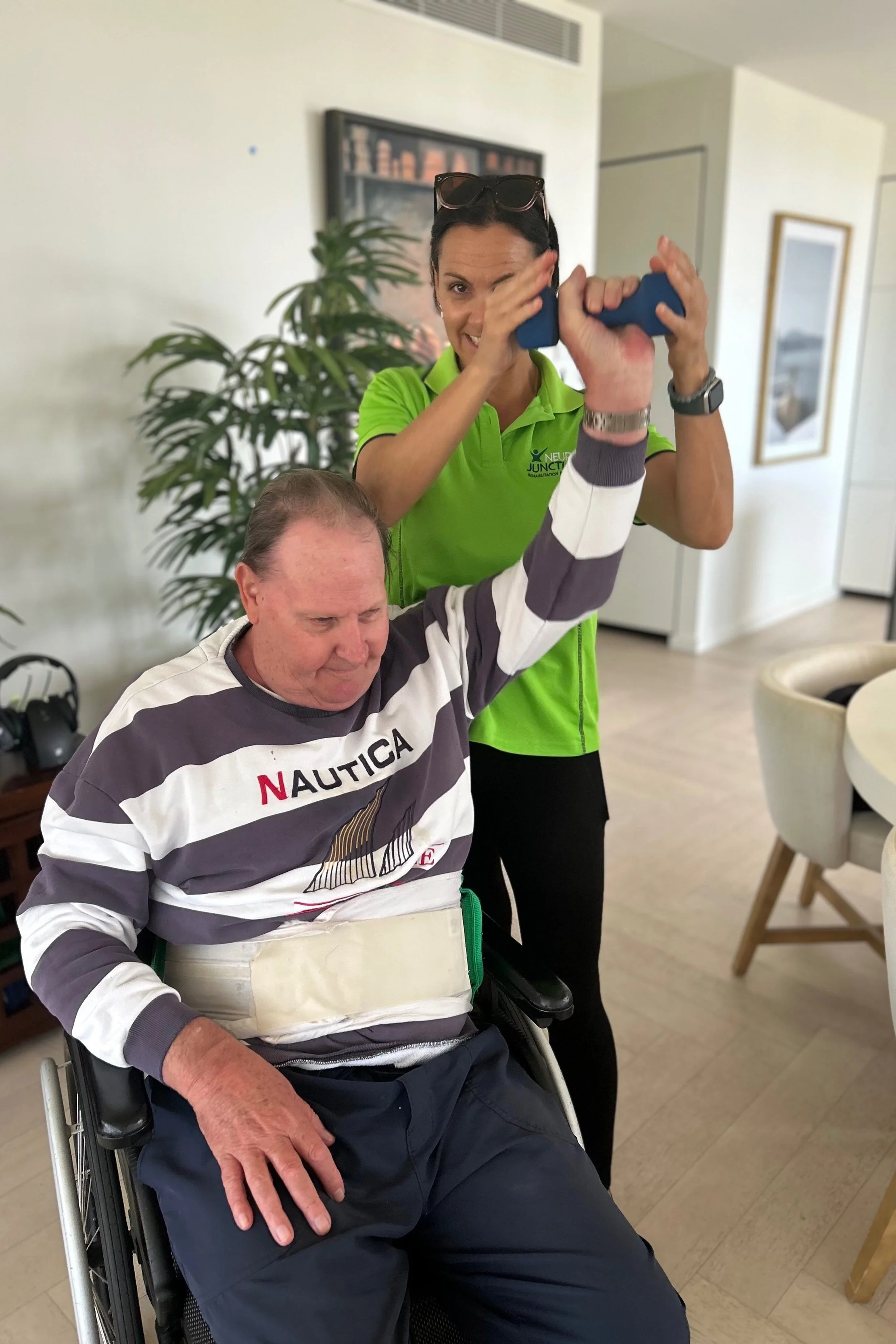
Reduced movement due to Cerebellar Ataxia can lead to muscle weakness, and this muscle weakness can in turn exacerbate the symptoms. Individualised strengthening exercises help build muscle strength and endurance, which can support better movement control and reduce fatigue.
-
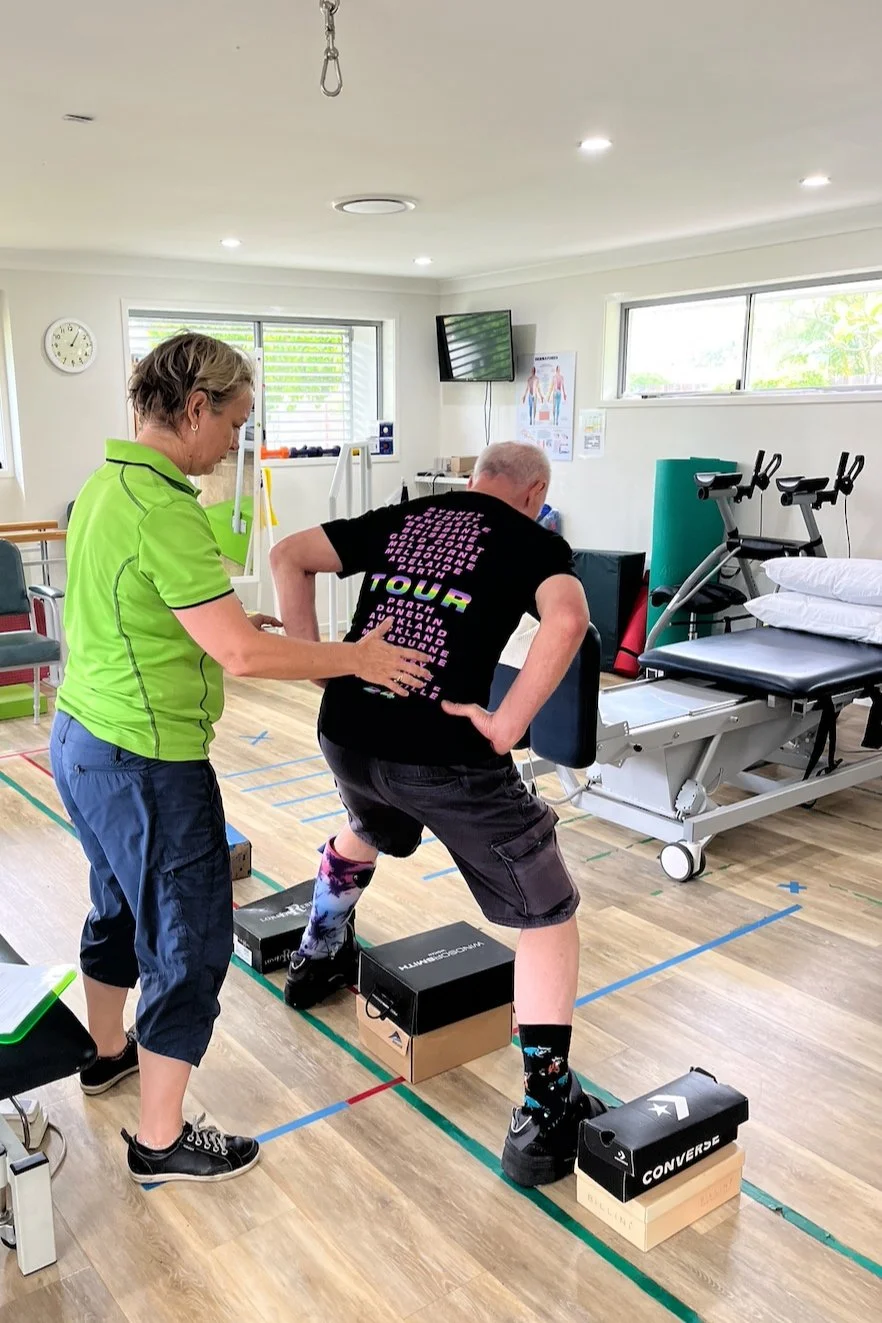
Walking can be particularly challenging for people with cerebellar ataxia. Gait training involves practicing walking patterns, using assistive devices if necessary, and improving the mechanics of the movement. This aims to make walking safer and more efficient.
-
If dizziness, or eye/head coordination issues are a symptom, vestibular rehabilitation can help. This type of therapy focuses on improving or compensating for loss of function in the reflex between the eye muscles and the inner ear and brain to reduce dizziness and improve balance.
-
Education and up skilling on adaptive techniques and recommendation of assistive devices that can make daily tasks easier. This might include using special utensils for eating, modifying the home environment for safety, or learning new ways to perform activities that have become difficult.
-
By working with our team at Neuro Junction, individuals with cerebellar ataxia can maximize their physical capabilities, maintain independence, and improve their overall quality of life.
By working with our team at Neuro Junction, individuals with cerebellar ataxia can maximize their physical capabilities, maintain independence, and improve their overall quality of life.
Cerebellar ataxia can be a challenging condition, but with the right support and intervention, those affected can manage their symptoms and lead fulfilling lives.