
Dementia Care: How Community Occupational Therapy Can Help
Supporting people living with dementia to feel safe, stay independent and enjoy life at home.

A new approach to dementia care
Dementia can affect memory, communication, mood, behaviour and everyday activities.
As dementia progresses, people may need more support to manage daily life.
Gold Coast Health and Hospital Service (GCHHS) has developed a specialised inpatient model of care to better support people living with dementia, particularly when they have complex medical needs or changes in behaviour.
The aim is to provide the right care in the right setting, while recognising each person's individual needs.
Support in the community is also important to help people remain at home for as long as possible, where this is safe and appropriate.
What causes changes in behaviour?
Changes in behaviour may be a way of communicating an unmet need.
A person may be feeling confused, anxious, tired, uncomfortable or overwhelmed.
Changes to familiar routines or surroundings can also cause distress.
Pain, illness or other health problems may contribute to sudden changes in behaviour.
Understanding the person and what may be causing their distress can help families find ways to support them.
Instead of asking, “How do we stop this behaviour?”, try asking, “What might the person need right now?”
How can Community Occupational Therapy help?
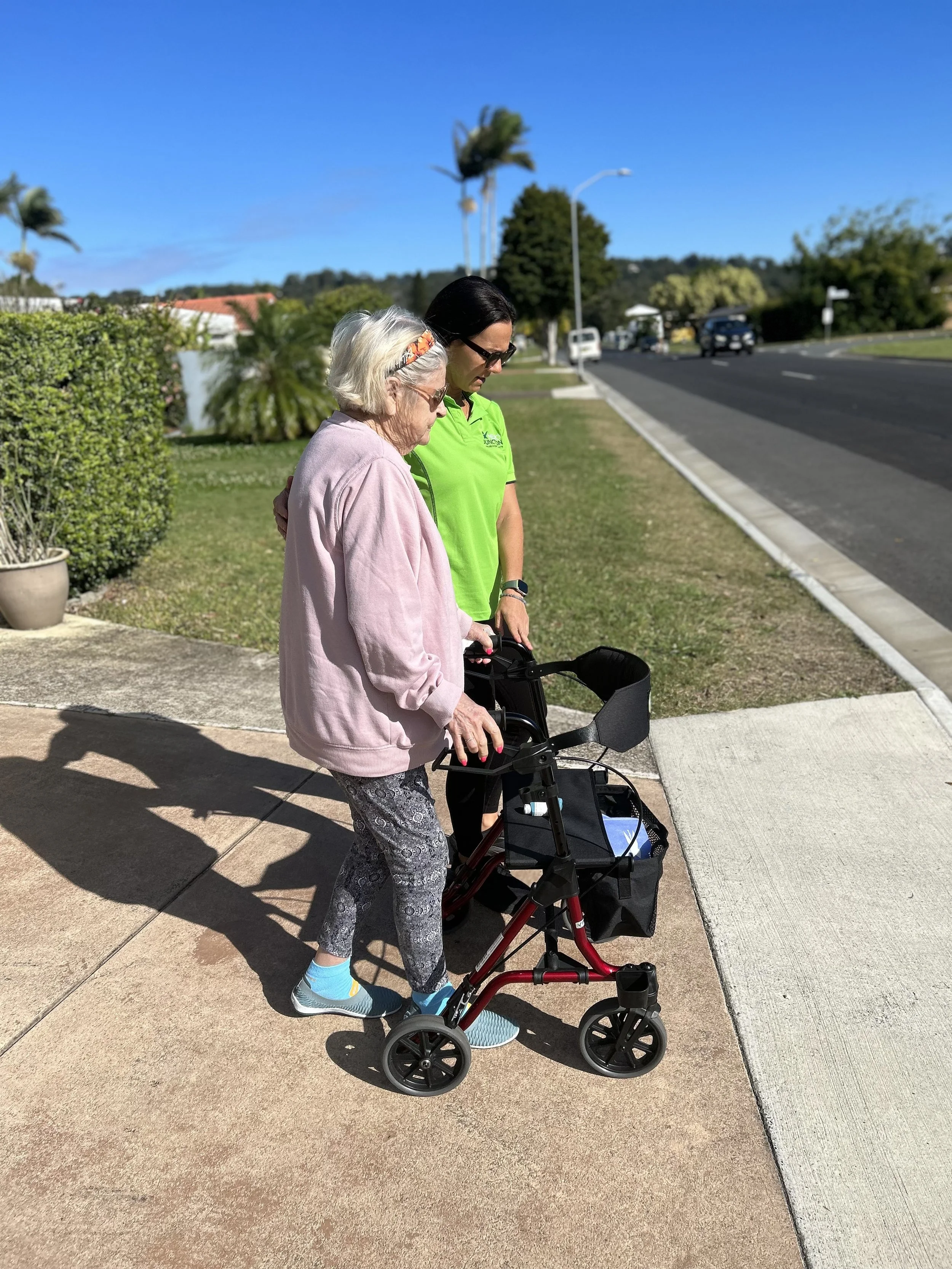
Community Occupational Therapists (OTs) can work with people living with dementia and their families to make everyday life easier.
Making the home safer: Suggesting practical changes to reduce hazards and support moving around the home.
Supporting everyday activities: Finding easier ways to manage dressing, showering, preparing meals and other daily tasks.
Creating familiar routines: Helping establish routines that provide comfort, purpose and structure.
Finding meaningful activities: Adapting hobbies and familiar activities to suit the person's current abilities and interests.
Understanding changed behaviours: Exploring whether the environment, daily activities or unmet needs may be contributing to distress.
Supporting families and carers: Sharing practical ideas to help manage daily challenges and encourage independence.
Planning for changing needs: Helping families consider what support, equipment or home modifications may be useful as needs change.
Simple ideas families can try
Keep daily routines as familiar and predictable as possible.
Use short, clear instructions and allow extra time.
Reduce noise and clutter if the person seems overwhelmed.
Encourage activities the person enjoys and can still participate in.
Offer reassurance and simple choices.
Look for patterns in changes in behaviour and consider what might be causing them.
Seek advice from a health professional if there are sudden or concerning changes.
Working together to support people at home
Hospital care, community services and family support all play an important role in dementia care.
Community Occupational Therapy can help connect what works for a person in their everyday life with the support they need at home.
Early support may help families feel more confident and better prepared as needs change.
Every person living with dementia is different. What works for one person may not work for another.
The key message
Small changes can make a big difference.
By understanding the person, adapting everyday activities and creating a supportive home environment, Community Occupational Therapy can help people living with dementia maintain independence, dignity and quality of life, while supporting the families and carers who walk alongside them.
Based on the GCHHS New Inpatient Specialised Dementia Services and Behavioural and Psychological Symptoms of Dementia Model of Care presentation, February 2026.